
When “I’m Triggered” Stops the Scene
On the difference between ending a conversation and working through one.

Hey Riffers,
Thank you to all who responded so supportively about my book announcement last week. It meant the world to me.
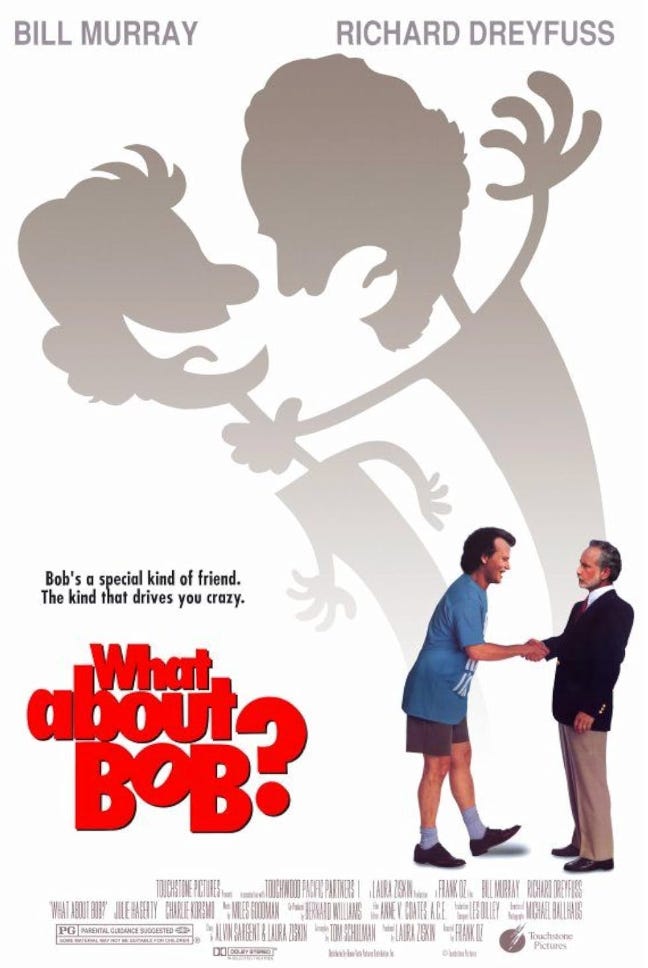
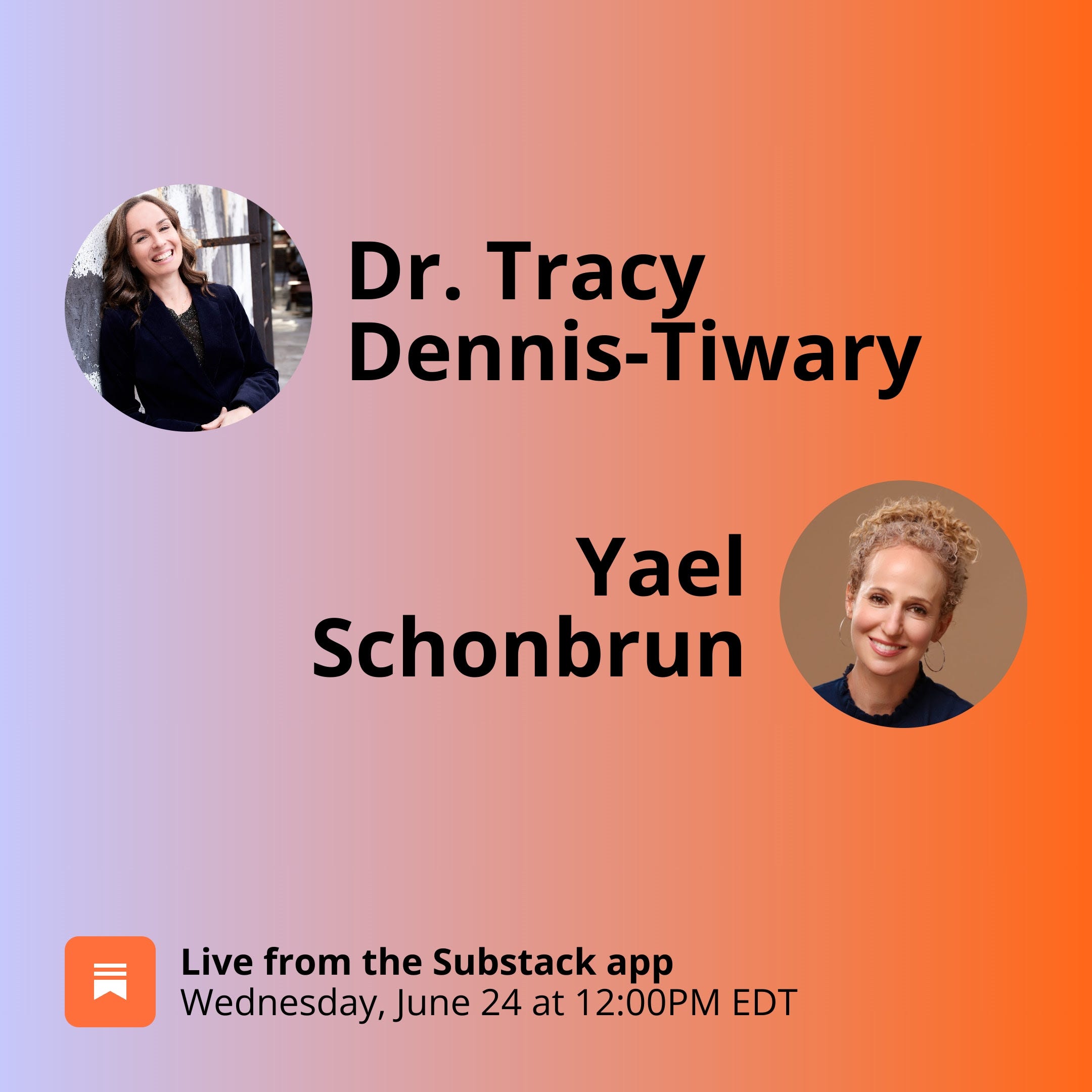
I want to make a different kind of announcement today. My fellow Substack writer and one of my favorite humans to chat with (because she’s brilliant, funny, and allergic to bullshit), Dr. Tracy Dennis-Tiwary and I realized we both take the psychology of entertainment too seriously. We decided to embark on a new podcast to share why we think you should be watching more of it. Our new podcast, This is Why You Love It, delves into favorite movies and shows, exploring why certain movies wreck us, what our fictional attachments say about our real relational needs, and what social science says about the mental health benefits of being a Netflix aficionado.1 My lane will be the relational stuff, Tracy's will be the individual stuff. If that sounds like something you'd enjoy, subscribe here and please do join us this week—Wednesday, June 24th at 12pm EST(US)—for our first live Substack digging into one of the best (and worst) therapy movies ever: What About Bob?
And now, let’s talk triggers.
If you don’t already know Melinda Wenner Moyer, she regularly contributes to The New York Times and pens one of my favorite Substacks, Now What , offering nuanced deep dives into the science of raising actual human children from someone not afraid to call out pseudoscience and who came up with one of my all-time favorite book titles, How to Raise Kids Who Aren't Assholes. When Melinda reached out to me for some thoughts on overuse/misuse of mental health words (specifically, the word “triggered”), I was nerdily excited.
You can check out her terrific NYT piece here.
Of course, I had even more more thoughts on how mental health words can interrupt healthy relationship dynamics.2 And lucky for you, I’m going to share them here.
End Scene
I want to start with a scene from The Office, which offers, in my opinion, the perfect metaphor to explain why words like “trigger” can be so relationally problematic.3 In this scene, Michael is taking an improv class, and in classic Michael Scott fashion, keeps derailing every scene. How does he do it? He pulls out a gun. Every. Single. Time.
And here’s his deadpan explanation for why: “You can’t top a gun.”
He’s right. The gun ends every scene before it can go anywhere interesting. Every scene dies the same death because it is the ultimate scene-ender.
Using “I’m triggered” as conversational one-upsmanship can work the same way. It carries such a heavy emotional weight that it stops a scene from going anywhere.
Everyday “Triggers”
The democratization of therapy-speak is a mixed bag. On the upside: less stigma, more shared vocabulary, a cultural shorthand that helps people name experiences and ask for what they need. These are real goods.
But there’s a cost in close relationships that often gets overlooked. The word trigger is a great example. It has a clinical home in trauma work where it has long described cues that rocket the nervous system to a past threat as if it's happening right now. That description is important.
But as the word “trigger” has become more commonly used, it’s become increasingly hard to distinguish between people describing something painful or traumatic, hurtful or abusive. But these distinctions matter enormously— clinically, relationally, and practically. When “triggered” becomes a catch-all for any uncomfortable experience, that difference collapses. And when the difference collapses, people start to misread discomfort as danger, which changes how they respond to it.
Just like Michael Scott pulling out his gun in each improv scene, one person saying they’re triggered mid-conflict can easily function as an emergency brake, signaling that the conversation has crossed into traumatizing territory. Sometimes that’s accurate. Sometimes it isn’t.
Two people trying to work through a relational rupture will often feel real pain that doesn’t warrant the label of trauma. And when we shut the conversation down at exactly the moment it needs to keep going, we trade the discomfort of a hard conversation for something costlier: permanent impasse.4
On Flexibility
The point I’m making here isn’t that we should be dismissive of language. To the contrary. Language has real impact and being thoughtful about how we use it matters. Acting like language is neutral will leave people unprotected. But on the other hand, policing one another’s language also backfires.
The middle ground when it comes to language is to maintain a somewhat flexible relationship with words. This is the stance that an evidence-backed treatment called Acceptance and Commitment Therapy takes. That is, it recommends that we pay attention to how we relate to our words, what our attachment to them does to us and for us, and that we notice when we get overly rigid about using or refusing to use words.
In the case of the word “triggered,” a flexible stance may mean that using the word to describe your experience can be useful. It may, however, be less useful if the other person feels like you’ve ended the scene before they could participate in it.
The show English Teacher nails this kind of scene lockdown with deadpan brilliance. A student explains that a classmate, Kayla, no longer meets criteria for “Asymptomatic Tourette’s.” It turns out that, according to her classmates, a more accurate diagnosis is “Kayla Syndrome.” The teacher responds drily: “I’m sorry that you have Kayla Syndrome.” The student: “It’s actually better if you call it ‘KS,’ because it’s super triggering for Kayla to hear her own name.” Again, it’s an end scene moment.
If we use words like “trigger” as improv guns, we run the risk of preventing people from being able to show up imperfectly, to make mistakes and correct for them, to share feelings and receive feedback on how they shared, to misunderstand and then strive to understand better. An overly rigid use of the word “triggering” can prevent a lot of healthy yet imperfect, and painful yet necessary moves that relationships require.
Couples, families, friends who learn to work through hard moments, to stay in the discomfort long enough to come out the other side, tend to feel more secure, not less. Repair is what powers relational closeness. When our language trains us to exit rather than stay, we don’t just avoid pain. We accidentally opt out of the process that makes closeness possible.
Effective improv requires staying in the scene. The foundational rule of “yes, and” only works if you let other people into the scene. The scene goes somewhere because you don’t know where it’s going, because you’re willing to stay in the awkwardness and work it out together. You stay present, you respond to what’s actually in front of you, you let someone else shape the direction even when you don’t love it.
This is, not coincidentally, what close relationships ask of us too.
So what do we do with the word?
Ultimately, I don’t think the problem is the word “trigger” itself. It’s the function it serves when we allow it. When “I’m triggered” is functioning as a scene-ender, as in, “you triggered me and therefore we are done here”, it closes a door that may be hard to reopen. But, if someone says, “I feel triggered by how this started, could we try a different approach?” —that’s useful. That’s information. That’s opening a door.
Melinda’s piece quotes Dr. Rachel Needle, who suggests replacing “triggered” with more specific and descriptive language: “that really frustrated me,” or “that reminded me of something difficult that happened in the past.” More specific language tends to be more accurate. It also tends to keep conversations going rather than stopping them cold.
The goal isn’t to abandon the vocabulary of mental health. It’s to make sure our language is flexible enough to do what our relationships actually need: to stay in the scene, even when it’s uncomfortable and even when we don’t know where it’s going.
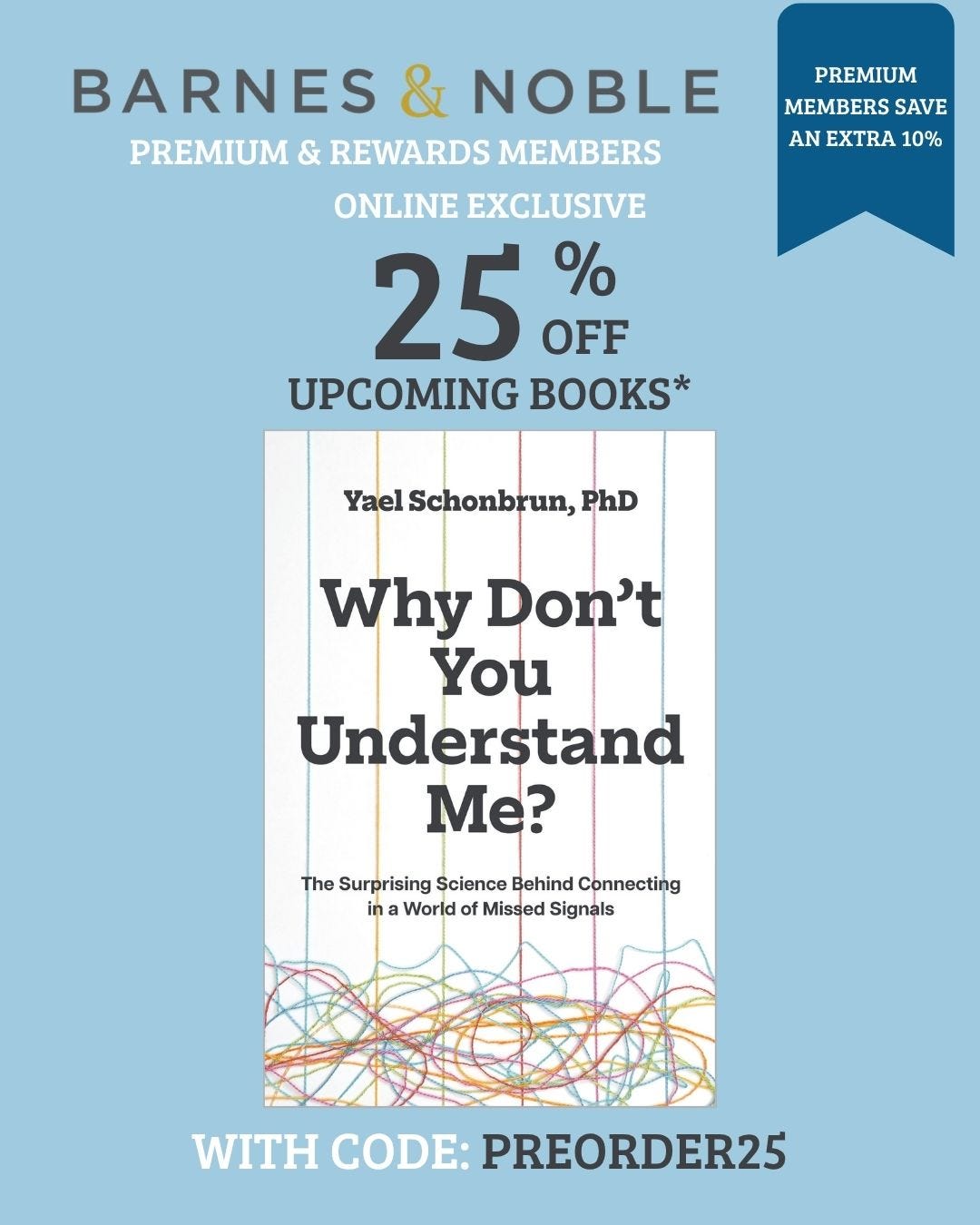
Before you go, I wanted to share that Barnes & Noble is having a preorder campaign from June 23-26 and my book, Why Don't You Understand Me?, is included! B&N Rewards members (it’s free to sign up online) get 25% off all preorders! Use PREORDER25 at checkout. As I mentioned last week, pre-orders make a real difference to a book’s life, so it’s an incredibly helpful way to support the book, if you are in a position to do so. Thank you for your support!
This is what psychologists call a “reframe.”
If a person could have TOO many thoughts on relationships, well, that person just might be me.
As you can see here, I really do draw a lot of inspiration for psychological metaphors from good television.
How’s this for another movie reference? It occurred to me that if Michael Scott was a Top Gun pilot, I think his call sign would be “Permanent Impasse.”
When discomfort and danger collapse into the same word, relationships lose the room required for repair. Precision does not invalidate pain; it helps us decide whether the moment needs protection, accountability, tolerance, or a better conversation.
Reframing things or saying it in a different manner can do wonders how a relationship works in any setting. The way you write about this tiny of a detail is quite good.