
Kindred Spirits Are Made, Not Found
Relationship science, as foretold by Anne of Green Gables.

Hey Riffers,
This past week I was interviewed on a podcast and the host asked me the question: what's one book that changed your life? It’s a question I’ve been asked before, and one of my favorites.
Often, I find myself naming Man's Search for Meaning by Viktor Frankl, a book that I routinely reread because it reminds me of the power of purpose. But this time, I reached further back into my history with a much earlier literary transformation: Anne of Green Gables.
As a tween, Anne Shirley had a real hold on me. It could be because I was rather awkward, quite shy, and, I admit, prone to think no one liked me (‘a tendency I have since completely outgrown,’ she writes, hoping you’ll like this newsletter). It is likely also because Anne was thin-skinned and highly emotional: deeply hurt when someone insulted her appearance, rapturously in love at the mere prospect of a close friend.
But despite her intense emotionality and quickness to feel stung, Anne was also extremely lovable. And her lovability changed the people who were in relationship with her.
Decades after first meeting Anne, it occurs to me that in this book, I had one of my first realizations that lovability may not have anything to do with being calm, put-together, and impervious to scrapes. Rather, it’s about how we approach our relationships. The particular how’s that Anne embodied—positive regard, energetic enthusiasm, never-ending curiosity in the world, a willingness to forgive, a dedication to refusing to reduce people down to their pricklier parts—make us more likable, and are also the elements that shape how likable we invite others to be.
A Story Foretelling Relationship Science
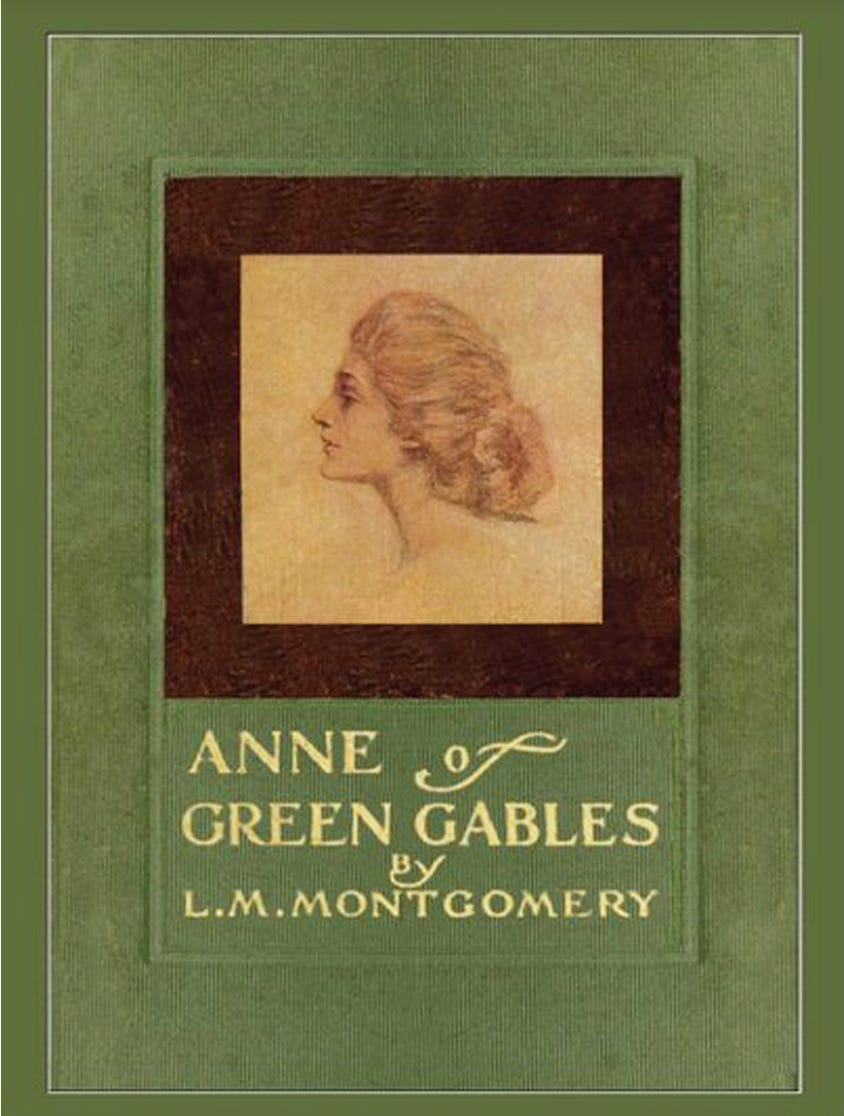
It was 1908 when L.M. Montgomery published Anne of Green Gables, the story of an orphan sent by mistake to Matthew and Marilla Cuthbert, an aging brother and sister who wanted a boy to help with farm work. What they got instead was a talkative, imaginative, chronically misunderstood girl. The story is an ode to the scrapes of growing up and, more importantly, the power of letting love in when it comes knocking. It’s also, I’d argue, a referendum on the best of relationship science, just written 50 years before the field existed. It's the kind of analysis Dr. Tracy Dennis-Tiwary and I usually do for screen-based entertainment (in our discussion series, This Is Why You Love It), but I’ll reserve Relational Riffs for my book habit. (But you can check out our conversation about Toy Story 5 and what Pixar has to say about screens here. And join us NEXT Wednesday when we discuss Widow’s Bay).
Now, let’s talk lessons in love from Anne Shirley and how they reflect the best of what relationship science has to say.
What’s one book that changed YOUR life?
The Mattering Effect
Matthew may be the first person, since Anne’s parents died, who sees that she matters and has value just because she is herself. In his eyes, Anne finally gets what her love-hungry heart has been yearning for: a relationship where she is loved for who she is and because she is, a relationship where someone wants her to belong to them and wants to belong to her.
That feeling that we truly matter? It’s what researchers describe as “a key factor in the process of defining one’s sense of worth and purpose in life.”1
[Says Matthew,] ‘...a little “appreciation” sometimes does quite as much good as all the conscientious “bringing up” in the world.
The Benefits of Forgiveness for the Forgiver
Anne gets mad. A lot! But she also allows her anger to cool and give way to forgiveness (it took years with Gilbert Blythe, but she did get there eventually). Forgiveness research confirms real benefits for the forgiver: lower rumination, better health, sturdier relationships. As one meta-analytic review summarized, “People with forgiveness had higher subjective well-being, greater life satisfaction, more positive emotions, and fewer negative emotions.” Anne’s version comes with a side of smugness,2 which the research doesn’t endorse but… doesn’t prohibit either.
‘It’s hard to be told you look like a scarecrow and I wanted to say something back. But I didn’t. I just swept her one scornful look and then forgave her. It makes you feel virtuous when you forgive people, doesn’t it?’
Being interested makes you more interesting—and likable
Anne is captivating not because she says surprising things, but because she's endlessly interested — in roses, ridge-poles, and whether prickly old ladies contain hidden depths. Research on self-expansion finds we're drawn to people who enlarge our sense of the world, and that couples who keep expanding together stay more satisfied over the long haul. The trick isn't becoming more entertaining, smarter, or comic-level funny. It's staying curious enough that you’re always expanding what you see and where your mind travels.
[Says Marilla:] ‘She is kind of interesting, as Matthew says. I can already feel that I’m wondering what on earth she’ll say next. She’ll be casting a spell over me, too. She’s cast it over Matthew. That look he gave me when he went out said everything he said or hinted last night over again.’
Warmth is contagious.
Anne gives positive regard easily and willingly, including to adults who are, on the face of it, rather prickly. She generally manages to remain curious past the first impression and, in so doing, often finds kindred spirit-hood, even if at first she didn’t think it was there.
Research on reciprocal liking suggests kindred spirits are often made rather than found. That is, when we treat someone as if they could be one, and the odds improve considerably that they will become one. Or, as researchers more dryly put it: “a positive evaluation increased both affective and behavioral attraction.”3 Maybe being the person who looks for the good in others helps those who are relationally lazy get there (see Miss Josephine Barry, for example).
[Says Josephine Barry to herself:] ‘I don’t know that she is as amusing as she was when she was a child, but she makes me love her and I like people who make me love them. It saves me so much trouble making myself love them.’
It requires patience and willingness to recognize people’s multitudes.
As Anne shows us and research confirms, humans contain multitudes, and when we look for those multitudes, we often find them. But it’s all too easy to slip into reductive narratives. The fundamental attribution error, for one, explains that our minds reflexively reduce people to their pricklier parts and, furthermore, the mind wants to create stories of villain and victim. But human realities are far more complex, and sometimes it can take a great deal of patience and a lot of willingess willingness to keep looking.
‘Miss Barry was a kindred spirit, after all,’ Anne confided to Marilla. ‘You wouldn’t think so to look at her, but she is. You don’t find out right at first, as in Matthew’s case, but after a while you come to see it.’
Vulnerability begets connection.
Anne talks a lot, sharing her woes (red hair, lack of puffed sleeves4) and wins (a shapely nose, a penchant for big words) with anyone who will listen. She gets criticized for talking too much, to be sure, but it’s also clear that many people find her loquacious oversharing absolutely endearing. Research backs this up: Disclosing makes you more likable while withholding information makes people like and trust you less.
‘Mrs Lynde says she once heard a minister confess that when he was a boy he stole a strawberry tart out of his aunt’s pantry and she never had any respect for that minister again. Now, I wouldn’t have felt that way. I’d have thought that it was real noble of him to confess it, and I’d have thought what an encouraging thing it would be for small boys nowadays who do naughty things and are sorry for them to know that perhaps they may grow up to be ministers in spite of it. That’s how I’d feel, Marilla.’
You can choose to like others (even when it’s hard)
Anne recognizes liking is less like chemistry and more like carpentry. Some people you love right off, and some you construct affection for, plank by effortful plank. That is, compatibility isn’t deterministic (we click with our 'matches' and that's that) because it isn't discovered between two fixed personalities — it's built by them.
‘You know there are some people, like Matthew and Mrs Allan, that you can love right off without any trouble. And there are others, like Mrs Lynde, that you have to try very hard to love. You know you ought to love them because they know so much and are such active workers in the church, but you have to keep reminding yourself of it all the time or else you forget.’
‘I've made what I would once have called a heroic effort to like her, but Josie Pye won't be liked.’
May You Be Understood
And one final one:
‘Matthew understands me, and it’s so nice to be understood, Marilla.’
I’ve apparently been stewing on this one for decades. The question of why feeling deeply seen and understood feels so good, and why misunderstanding stings the way it does, has trailed me from that first reading all the way into the book I’m publishing this fall: Why Don’t You Understand Me? Which is why my answer to that podcast host was that an eleven-year-old fictional redhead handed me the question I’d spend my career on.
So, with that trip down my literary memory lane, let me wish you a summer that includes at least one kindred spirit you didn’t expect. And also, may there be one Josie Pye you’ve gracefully stopped trying too hard to like.
Relationally yours,
Yael
P.S. Paid subscribers, mark your calendars: I'm hosting a Relational Riffs AMA about Why Don't You Understand Me? on November 19th at 12pm EST. It’ll be just in time for all the Thanksgiving misunderstandings.
Research confirms that liking begets liking; so let me subtly point out that the button is right there. And if you know a kindred spirit who was also raised by this book, send this their way. Kindred spirits, as we've established, are not so scarce as we think.
Finally, please do share what one book has changed YOUR life!
Like so many psychological phenomena, forgiveness is more complicated than being all-good or all-bad. I’ll be dedicating a newsletter to the nuances of forgiveness soon.
Come to think of it, I don’t know much about research on smugness. Consider my interest piqued.
Researchers: helping us understand the world using words we cannot understand.
I will never stop enjoying my three sons’ confusion as to why Anne was so obsessed with puffed sleeves.
I love this and now I want to go read the books again!
Another gem, per usual! Love the story about you as a preteen too…been there!