
Disagreement, Redefined
Good news for bad disagreers, in conversation with Harvard professor Julia Minson

Happy Tuesday, Riffers!
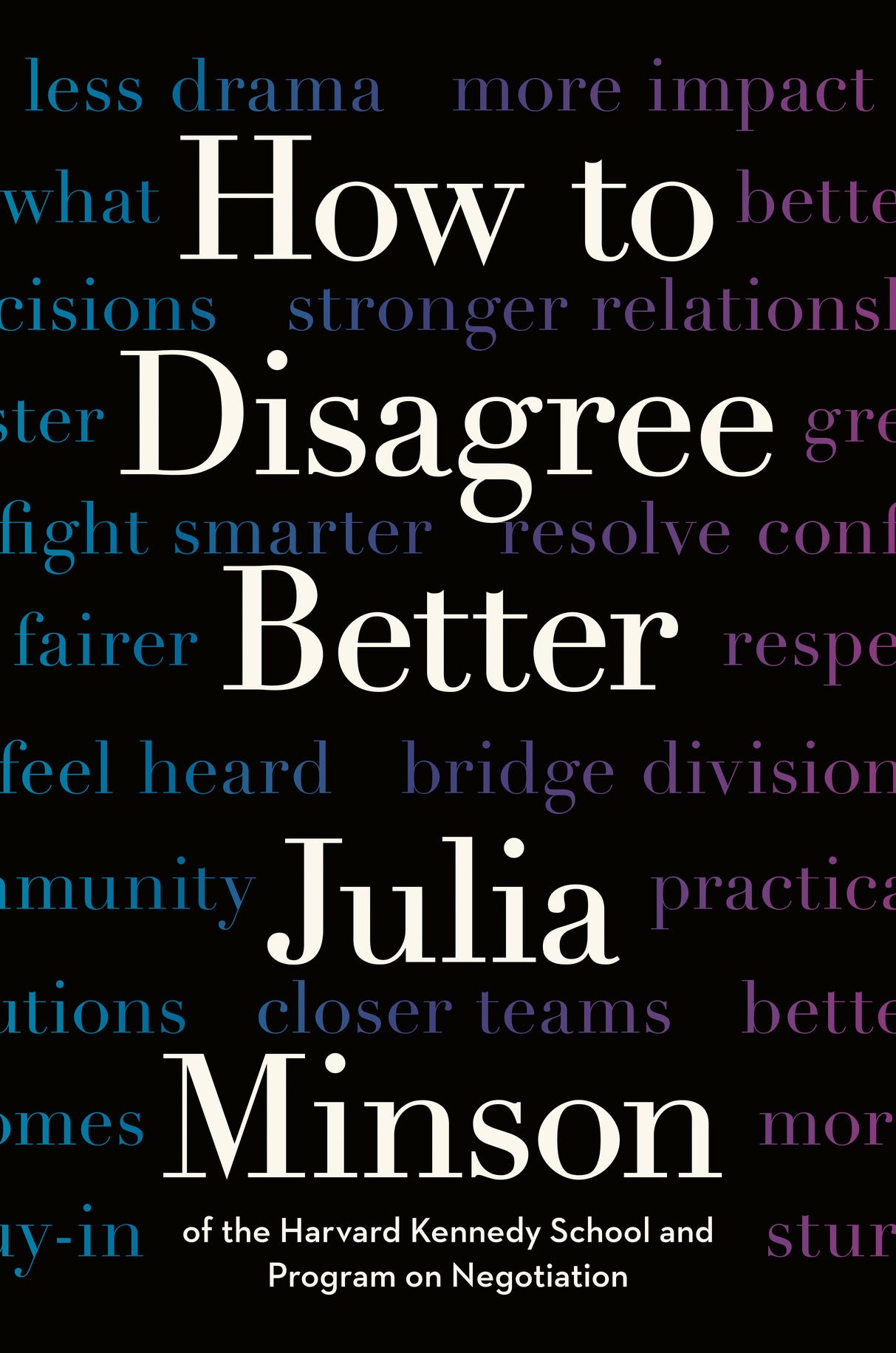
Since the book came out, I find myself repeatedly recommending Harvard Professor Julia Minson’s How to Disagree Better.1 Julia studies the psychology of disagreement—how we engage with opinions that conflict with our own, especially around hot-button topics like politics, values, and health decisions. Her core idea is that people who disagree better are more receptive to opposing viewpoints, genuinely caring about and being willing to acknowledge where the other person is coming from.

I had the chance to talk with Julia for my podcast, Psychologists off the Clock. While you can listen to the full recorded conversation here, in today’s newsletter, I’ll share a piece of our conversation that wasn’t included in that episode.
Let’s start with the best definition of constructive disagreement I’ve ever encountered, one that comes from Julia’s work:
Constructive disagreement is any disagreement that increases the parties’ willingness to talk to each other again.
Sit with that for a moment, if you can, because it reframes the whole goal of disagreement. It’s no longer about who is right or wrong or whether you’ve reached consensus. It’s about whether the conversation left the people involved not only open to talking again, but increasingly inclined to do so.
I find this goal of disagreement, as well as Julia’s body of research, transformative in shifting the measure of success in difficult conversations from winning to preserving the relationship as a space for future exchanges. Whether it’s conversations with people we’re close to or more peripheral, community relationships, this shift has the potential to foster more connections, even when we don’t see eye-to-eye.
According to Julia’s research, receptivity to other people’s points of view is the mechanism underlying it all. And one of the coolest things about receptivity is what happens when you practice it.
Julia agreed to a brief bonus Q&A after we stopped recording, in which she shared with me why "you're not listening to me" is so unlikely to ever produce a good listener, why receptivity is contagious, and what therapists know about modeling that political leaders apparently don't.2 [conversation lightly edited for length and clarity]:
