
How to Be Understanding Without Getting Murdered
A both/and approach to generous understanding.

Hey Riff Raff,
We're in the dog days of summer, that magical time when working parents like me realize we're facing an impossible choice: be a rocking parent (and fail at work) or nail our professional goals (and miss the sweetness of summer with our kids).
Sound familiar?
It's classic either/or thinking, and it's exactly the kind of mental trap that shows up everywhere in our lives—especially when it comes to understanding difficult people.
Today I want to tell you about a detective who solved this puzzle in the most extreme way possible, and what it teaches us about being generous without being a doormat.
Give an Inch, They’ll Take a Mile?
From the Russian proverb "offer a finger; he will bite a hand off to the elbow," to the Norwegian "a rolling snowball will be harder to stop," to our American, “give ‘em an inch and they’ll take a mile,” every culture seems to have a pithy warning about the dangers of generosity.
We've got cautionary tales like Neville Chamberlain’s wartime appeasement policy, children's books about the perils of giving mice cookies, and probably some personal painful memories from that one friend who turned every coffee date into a three-hour therapy session about their commitment issues.
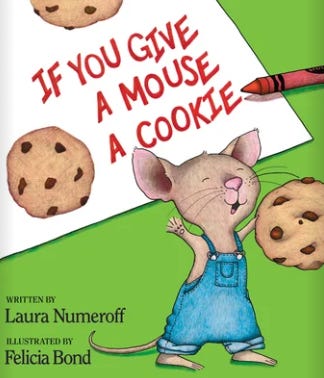
But when we drop into either-or thinking, we narrow our choices to either being selfless doormats or selfish self-protectors. And we neglect a whole range of other options for how to give generously while protecting ourselves from greedy mice and other kinds of tyrants.
There are more options to consider: ones that allow us to contribute to positive cycles of generosity while also remaining self-protective. Rather than seeing it as an either/or dilemma, adopt a both/and1 approach.
Enter Detective Kim Mager: Professional Understander of Very Bad People
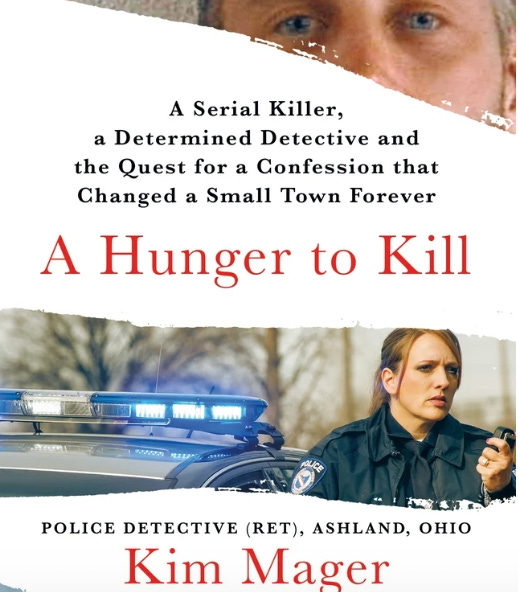
Kim Mager, a retired law enforcement officer from Ashland, Ohio, had a specialization in handling violent crime, sexual assaults, and child abuse cases. On a Tuesday morning in mid-September 2016, Mager got two calls and a text from her captain while she was showering before her shift. She didn't respond immediately (because, you know, shower), which irritated him. He needed her to come in immediately because officers had just rescued a woman from a horrific scene.
This woman had been abducted and repeatedly sexually assaulted for several terrifying days. When her kidnapper fell asleep, she had managed to escape her restraints, steal his phone, and call 911. She guided police to her location, leading to both her rescue and the arrest of her captor.
As the only female detective in the squad, Mager typically conducted the interviews with sexual assault victims in Ashland, so rushing to the station wasn't unusual for her family. But it quickly became clear that this was no ordinary case. The information gathered from the victim suggested there were more casualties to be investigated.
By the time Mager finished interviewing the victim, the perpetrator, Shawn Grate, had already been questioned by her captain and had become uncooperative. Mager knew she needed a different approach, one that was more her typical interview style. As Mager described it:
Power and personal ego have never been my friends during interviews.
Rather than a more direct, confrontational approach, Mager looked for ways to “connect and establish rapport, all the while trying to find what brings a person to a place where they will talk.”2 Through 33 hours across eight days of interviews, Mager led with generous understanding, even while holding Grate accountable.
What Does Generously Understanding a Serial Murderer Look Like?
What does it look like to hear about murders and assaults while still conveying generous understanding? Well, for one thing, Mager repeatedly told Grate she saw that he was hurting too. She was able to hear about the harms he caused while also recognizing that his motivations could partially be traced to suffering he experienced. She acknowledged he had done terrible things but that he was trying to be honest with her. She explicitly and repeatedly told him how much she appreciated his forthrightness.
And, what’s perhaps most notable, is that all of these conversations took place after she had Grate's handcuffs removed.
In case it’s unclear, Mager knew without question that Grate was dangerous. His arrest had happened after a dramatic call from his last victim led the police to the house he was squatting in—a house that contained two decomposing bodies of other women he had already killed. She knew, from her interview with the victim, that Grate was not only a murderer, but a repeated and violent sexual assault perpetrator.
Here’s how Mager explains the rationale behind her approach:
Lots of officers like to come in hot and heavy during interrogations. But I’d learned early on to be less commanding and allow myself to exhibit a level of empathy for the suspect despite any negative feelings I might have about what they were suspected of doing. Over time, I realized that this tactic gave me an edge over other investigators, whether I was communicating with a victim or suspect.
I can almost hear people thinking, “Wait, she’s being NICE to the serial rapist and killer? And you are saying that’s good?”
I get it. This challenges everything we’re told about how to deal with dangerous people. But Mager’s approach wasn't about being soft on crime or excusing heinous crimes.3 It was about recognizing that understanding someone's humanity—even someone who has done inhuman things—can be the most effective way to hold them accountable and protect others.
Generosity Works… So Long as it Doesn’t Get You Killed?
The results of Mager’s detective work were pretty spectacular. At one point, Grate told her:
I'm in shackles, but you freed me.
He credited her understanding:
You didn't judge me, and you showed me compassion.
Over those many hours of interviews, Mager’s generous understanding led to Grate confessing to five murders and multiple other crimes. He gave information that allowed bodies to be found.
Cases were solved. Justice was served. Checkmate for generous understanding, right?
Well, not so fast…
While Grate was crying, confessing, and apparently having breakthrough moments, he was also actively planning to kill Detective Mager. As a jail informant disclosed to Mager, Grate had been studying where she kept her gun, plotting to murder the very person showing him compassion. His goal? To set himself apart as a serial killer who committed murder while in custody.
Even as her understanding was getting results, it was also putting her life in danger. It's like the ultimate validation of every "give an inch, take a mile" warning ever uttered by a concerned parent.
We Should Offer Generous Understanding (But Strategically)
So what exactly was Detective Mager doing that made her approach so effective yet safe? Her strategy perfectly illustrates what Wharton psychology professor Adam Grant calls being “otherish.” She shows us that generous understanding can work even in the most extreme circumstances… so long as we pair it with smart boundaries. (Hey, if it works with serial killers, imagine what it could do for your relationships with people who aren’t considering murdering you.)
And here’s why it works: Research highlights two types of relationships: communal (where you give based on care and need) and exchange (where you expect tit-for-tat repayment). In healthy close relationships—the communal ones—giving inches actually creates a virtuous cycle of reciprocity. You listen to your friend's breakup drama because you care, not because you're keeping score. They bring you soup when you're sick because that's what friends do, not because you have outstanding relationship debt.
But remember, most complicated phenomena are not either/or, they are both-and. You can actively cultivate communal relationships through generous understanding while still protecting yourself. The goal isn’t to identify who’s “communal” versus “transactional” and only be generous with the “right” people. The goal is to use generosity to create better conditions for the communal end of the relationship spectrum.
This is where most people get stuck. I see this constantly in couples therapy: One partner gives and gives (usually while silently keeping score), grows resentful, and eventually explodes with a detailed accounting of every unreciprocated kindness since 2019. The other partner, who genuinely didn't realize they were supposed to be keeping a tally, feels blindsided and defensive.
The problem is the lack of reciprocity, to be sure. But, and this may surprise you, it’s also the scorekeeping. When you start monitoring equality in giving, studies show that warmth, natural care, and overall relationship satisfaction are eroded. Scorekeeping damages the thing you are trying to protect.
One of the main problems in everyday relationships? No one detects giving behavior from other people as well as they detect their own. It's called availability bias, and it means you remember every time you loaded the dishwasher, but you might not notice the 47 times your partner took out the trash. This isn't because anyone's a terrible person, it's just how brains work.
The Secret Sauce: Becoming “Otherish”
As Grant writes in his book Give and Take:
If takers are selfish and failed givers are selfless, successful givers are otherish: they care about benefiting others, but they also have ambitious goals for advancing their own interests.
Translation: You can foster generosity in your relationships AND protect your own needs.
Grant continues:
Being otherish means being willing to give more than you receive, but still keeping your own interests in sight, using them as a guide for choosing when, where, how, and to whom you give.
This is exactly what Detective Mager did. She gave generously enough to solve five murders, but she worked within institutional safeguards and accepted limits when the danger became clear. She used generous understanding to create the conditions where even a serial killer wanted to reciprocate—while keeping herself safe.
The same principle applies to your relationships, just with lower stakes and better outcomes.
Your Homework
Instead of giving up on understanding or becoming a relationship accountant, try this:
Start with approach goals, not avoidance goals. Research from 2014 shows that setting positive goals (like "have more fun together" or "increase intimacy") works better for givers, receivers, and relationships than setting negative goals (like "prevent conflict" or "stop being taken advantage of"). Approach goals keep you in a giving mindset while encouraging your partner to participate in the giving too.
Remember this is the starting point, not the end point. Unless you're married to a tyrant or a greedy mouse (in which case, we need to have a different conversation), most relationship problems can improve with hope, interest, effort, and collaboration.
Trust the process. In communal relationships, giving inches doesn't turn into mile-taking—it turns into a virtuous cycle where everyone wants to give.
The Bottom Line
Just like those summer days don't have to be either perfect parenting OR productive work, your relationships don't have to be either generous doormat OR selfish self-protection. There's a both/and option that Detective Mager proved works even with serial killers.
You can be understanding AND boundaried. Generous AND self-protective. Caring AND strategic.
The next time someone tells you that giving an inch leads to mile-taking, remember: sometimes giving the right inch, in the right way, with the right safeguards, leads to something beautiful—even if the person you're dealing with initially had murder on their mind.
Stay understanding. But strategically so.
If you know someone who needs to hear that understanding people won't actually get them murdered, share this with them.
And if this newsletter helped you realize you can be compassionate without becoming everyone's emotional support human, hit that like button!
(P.S. - I don't recommend trying this on actual serial killers. Leave that to the professionals.)
An absolutely terrific book on this topic is Marianne Lewis’ and
’s Both/And Thinking. You can also check out my super-fun interview with Marianne here.The interviews and backstory are documented in Mager’s book, A Hunger To Kill, a totally gripping read.
Does anyone else think about the opening statement from the DA in My Cousin Vinny whenever anyone talks about a “ha-yeenous crime”? (i.e., heinous). Best. Movie. Ever.


There are n number of perspectives to a particular instance/circumstance. But what we interpret in that particular moment just shows how broaden view point our cognition has got. Take for example- I can see 20 feet with sheer clarity with my set of eyes but someone standing besides me with a set of binoculars can see 100 feet with clarity. I think so BOTH/AND works as a set of binoculars for every one as we gotta keep looking for what we can;t see in that particular instance because we are just looking it from our own lense which has got a small sample size. We gotta have the gray area and look for what's missing, if not we would be misinterpreting and leading to fights in relationships and one won't be able to understand other person. Gotta look for everything from ten thousand foot view point once every time.
Wow. This was a riveting read (and of course I want to know if there was any fallout for Mager when she learned about the perp's murderous intentions. Chilling!). I'm noticing that both/and thinking serves me better in pretty much every facet of my life, this is clearly no exception. It's nice to read anecdotal and sciencey reasons why those "beware of being generous" maxims don't tell a full story.